

The author of this article, Sami Aldeeb, draws on a variety of sources, particularly Arab ones, to highlight some little-known aspects of the Ramadan fast.
Binding nature
Ramadan is the ninth month of the Hegira calendar. During this month, Muslims must abstain from eating, drinking, smoking and sexual intercourse from dawn to sunset, unless they have a valid reason under Muslim law (Qur’an 2:187) [1]. Muhammad says: “Command your children to pray from the age of seven, and strike them at the age of ten” [2]. This commandment is extended to fasting[3]. This means that fasting can, in principle, be imposed from the age of seven.
The duration of fasting can vary from 10 to 21 hours a day, depending on the country and the year. In Africa, it is between 11 and 14 hours; in Europe, between 17 and 19 hours; in China and the USA between 15 and 17 hours. For those living on the southern tip of South America, it is only 10 hours[4] As the month of Ramadan can fall in both winter and summer, depending on the year, it is particularly hard when it has to be observed in very hot weather.
It doesn’t take a rocket scientist to guess the physical and psychological consequences of fasting. Even robust, healthy people suffer. A car without fuel can’t run, unless it’s rolling downhill, with all the risks that entails. As the famous Latin proverb says, Mens sana in corpore sano, (“A healthy mind in a healthy body”).
Fasting and work: danger!
Denmark’s Minister for Immigration and Integration has called on Muslims to take time off during Ramadan. “I call on Muslims to take time off during the month of Ramadan. They will avoid problems for the rest of Danish society”. In an op-ed published by tabloid BT, Inger Støjberg says: “I wonder whether a 1,400-year-old religious imperative is compatible with Danish society and the labor market in 2018.” She fears the effects of fasting on “safety and productivity”. For example, bus drivers “haven’t eaten or drunk for more than ten hours”. “This can be dangerous for all of us”, she warns[5].
Fasting and work in Muslim countries
Without going as far as the Danish minister, Arab and Muslim countries are aware of this problem. They provide for flexible working hours in the workplace, as well as in schools and universities. Here are a few examples of official working hours during the month of Ramadan:
- In Kuwait, from 9:30 am to 2:00 pm[6].
- In Jordan, by five hours a day[7].
- In Qatar, from 9am to 2pm[8].
- In Tunisia, from 8:30 am to 3:00 pm.
- In Morocco, from 9am to 3pm[9].
- In Saudi Arabia, from 10am to 3pm,
- In Egypt, from 9:00 am to 2:00 pm[10].
Excesses and health risks
The month of Ramadan is supposed to be a month of restraint and self-control. Yet it’s the month in which Muslims spend the most on food. There are two reasons for this. Firstly, food prices are rising at an unacceptable rate, as documented by several websites, [11]estimated at around 30%[12]. Secondly, overeating leads to particular illnesses, against which some websites also warn[13].
Violence and aggression
Many websites also report an increase in violent acts during this period. In a Moroccan video, a judge confirms this phenomenon, which is referred to as taramadinah, or Ramadan violence. This violence, whether verbal or physical, sometimes results in unintentional death, often for trivial reasons, and can be perpetrated by adults as well as minors[14]. There seems to be a fairly obvious link between the physical and psychological constraints of fasting and such violence.

An article posted on an Algerian website[15] says that the month of Ramadan in Algiers turns into a month of violence and brawls in homes, residential areas, markets and even on the roads. The violence may start with acrimonious verbal exchanges. Then they may degenerate into assaults involving the use of bladed weapons, sticks or stones. People, subjected to the long vigils of Ramadan nights, deprived of hours of sleep, forced to refrain from smoking and drinking their coffee, can become extremely irritable. What’s more, the cost of household expenses soars during this month.
A Moroccan website sounds the alarm: “I dream of a month of mercy and forgiveness, but I expect a month of violence, brawls and crime”[16]. The author explains that Ramadan, in the Muslim imagination, is a month of solidarity, love, peace and cohabitation. Unfortunately, the reality is far from this ideal. Every year we see the same behaviour: anger, aggression, brawls in markets and bus stations, murder, rape, arson, swindling and fraud.
In a Tunisian article[17], a doctor in the capital’s emergency department reports that during the month of Ramadan, the number of emergency cases increases by 50%. Many people lose control of their nerves. Their interpersonal relationships suffer. Others have road accidents after Ramadan evenings away from home.
A strategic month for terrorists
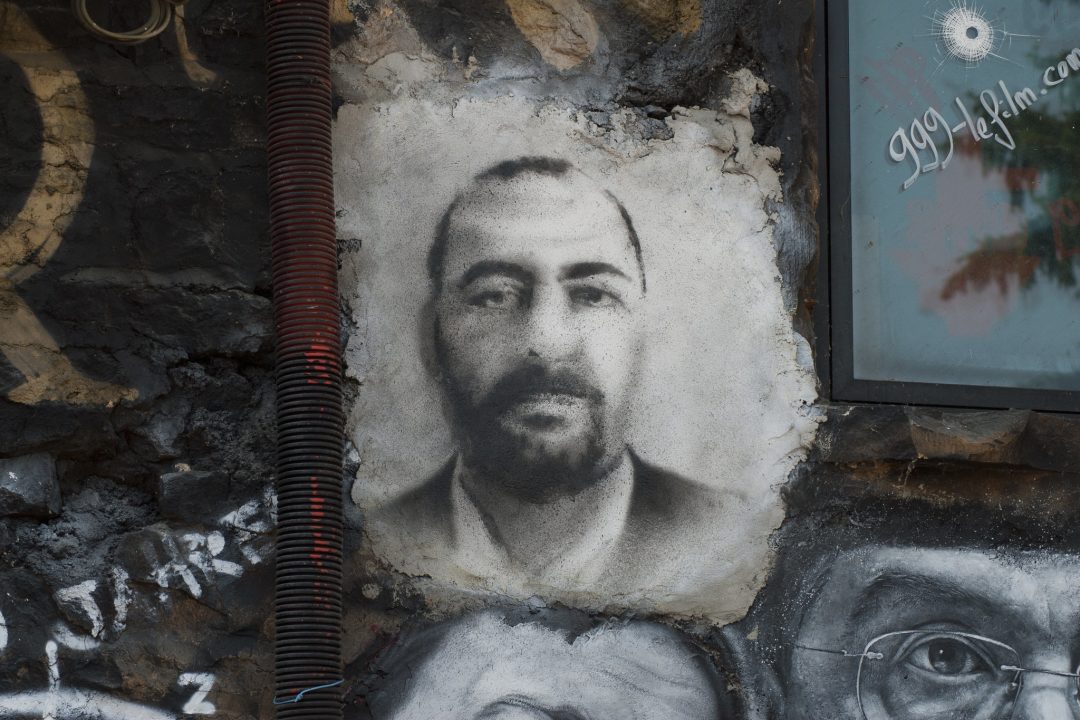
One article points out that during the month of Ramadan, terrorist attacks increase as a reminder of the battles undertaken by Muhammad during this month. Yet the Koran makes Muhammad the supreme model to be followed by every Muslim (Koran 33:21)[18]. This article points out that in 2014, Caliph Al-Baghdadi recorded a video entitled: “Message to the Mujahideen and the Muslim nation in the month of Ramadan”. In it, he urges Muslims to commit acts of terrorism to gain great merit with God.
He can be heard saying: “There are no deeds, in this month or in other months, more noble than jihad in the way of God. Arise then, O Mujahideen in the way of God. Terrorize the enemies of God. Seek death, for the life here below is fleeting, whereas the life hereafter is eternal…. Blessed is he who leaves this world in the month of Ramadan and meets his Lord in one of the days of forgiveness”.
Daesh’s spokesman in 2016 repeated the same call. He urged Muslims to undertake terrorist acts during the month of Ramadan against Western countries, the USA and Europe. He said: “Here comes the month of Ramadan, the month of raids and jihad, the month of conquest. Prepare yourselves to make it a month of woe in every place against the unbelievers”. He calls on Muslims to attack military and civilian targets[19].
Another article explains that terrorists prefer the month of Ramadan to carry out attacks, believing that their perpetrators have more religious merit, since Mohammed himself undertook battles during this month[20].
In summary, we note that:
- violence increases among Muslims during the month of Ramadan. By depriving themselves of what is essential for the normal maintenance of physical health, their mental state suffers;
- terrorist movements attach particular importance to the month of Ramadan. They call on Muslims to commit attacks against unbelievers, just as their role model, Mohammed, did during this month.
In view of the above, we can only support the proposal made by the Danish Minister for Immigration and Integration. Muslims should be called upon to take time off during Ramadan. In this way, they can ensure their own and others’ safety at work.
A call to responsibility from fasters
Personally, I’d like to add that Muslims should bear the possible unfortunate consequences of fasting in Ramadan. It would indeed be unfair if non-fasters were to bear them instead. Insurance companies should charge extra for those who fast during Ramadan, as they present a definite risk to themselves and society.
All insurance companies take into account their clients’ behaviour and past experience when setting premiums and benefits. A quick glance at the insurance forms reveals this. For example, companies insuring loans consider smoking to be an aggravated risk, and apply an additional premium (20% or more) for aggravated risks to smokers (see http://assurance-emprunteurs.net/fumeur).
Sami Aldeeb Abu-Sahlieh
Center for Arab and Muslim Law, Director www.sami-aldeeb.com
Dr. en droit, University Professor
Notes
[1] On the night of your fast, you are permitted to have sexual intercourse with your wives. They are a garment for you, and you are a garment for them. God knew that you were betraying yourselves. So He came back to you and pardoned you. Now approach them and seek what God has prescribed for you. Eat and drink until the white thread of the black thread of dawn manifests itself for you. Then fast until nightfall. But do not approach them while you are attached to worship in the sanctuaries. These are God’s landmarks, do not approach them. This is how God shows his signs to mankind. ~ Perhaps they will fear!
[2] Narrated by Abu-Da’ud http://goo.gl/a9yA80
[3] https://islamqa.info/fr/127233
[4] https://goo.gl/i9vuQZ; https://goo.gl/duztdH; https://goo.gl/oDvX8U
[11] See the Arabic google search on the high cost of food during Ramadan: https://goo.gl/fxeNkU
[12] See the Arabic google search on increased consumption during Ramadan https://goo.gl/jW2WYY
[13] See for example these sites: https: //goo.gl/DLM6p1; https://goo.gl/T4sgOK; https://goo.gl/yheBgY
[18] In the messenger of God, you had a good model for anyone who hoped in God and the Last Day, and remembered God very much.
[20] https://goo.gl/yWSEo7; see also https://goo.gl/b7tZZs; https://goo.gl/4uhHwr; https://goo.gl/2KPCdo; https://goo.gl/zugd4s; https://goo.gl/Hbs4fP; https://goo.gl/oj8daC; https://goo.gl/TK1KqK